
As “horseless carriages” became more frequent at the turn of the 20th century, even Whittier was part of the growing automotive industry through a handful of pioneering locals. The first automobile manufactured in Whittier was built in 1902 by Harry H. Hooper and Al Rowe of Scott Road in East Whittier.
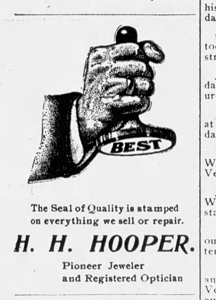
Hooper, a self-proclaimed “pioneer jeweler” and registered optician, was well known in town. He was a member of the Hillside Club, which had a club room in the Truman Berry Block at the corner of Bright Avenue and Philadelphia Street.
Hooper partnered with Rowe to purchase the blacksmith shop at the corner of Greenleaf Avenue and College Street (now Wardman), in a building formerly occupied by Hatch the Blacksmith. They later moved operations to the former McDonald & McPhee blacksmith shop at the corner of Milton Avenue and Philadelphia Street. Rowe was the machinist and continued the usual blacksmith work while still developing the auto factory they had envisioned. Hooper focused primarily on the appearance and design of the cars, nicknamed “Red Devils.” Even Al Rowe’s relative, Leon Rowe of Norwalk, worked for Hooper & Rowe.
By December 1903, Hooper & Rowe had completed their first vehicle. The car was built for Whittier contractor Van Jordan. It was a two-cylinder automobile with 40-inch steel-tired wheels. When asked how the car performed, Rowe mentioned the steep grade of the Newhall Pass grade near Santa Clarita—now commonly known as Sierra Highway:
“That car went over the Newhall grade. Anyone who has been over that grade in recent years knows that it still isn’t the easiest spot in the world. Well, in those days it was a tough road, but this car of ours went right over without a bit of trouble.”
Rowe joked that local horse farmers often waited at the bottom of the hill to tow cars that failed to make the climb—but their car required no assistance.
The second vehicle produced by Hooper & Rowe was a more upscale four-seat touring car with solid rubber tires. It featured a 12-horsepower gasoline engine and a removable tonneau (the open-air rear seating tub) and was geared to reach speeds of up to 25 miles per hour. This model became the basis for cars produced at their Whittier machine shop.
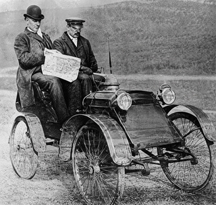
Also in 1904, another Whittier resident, Harry H. Custead, was working in his home garage on a two-passenger automobile he had been developing for two years. Its single-cylinder engine would top out at speeds of about 35 miles per hour. By the end of 1907, the car had reportedly logged several thousand miles. Meanwhile, across the country, Custead’s brother, W. D. Custead of Tampa, Florida, was developing his own invention—an “auto-truck.”
In 1906, Custead relocated Custead’s Jewelry Store from the Mason Building to 109 N. Greenleaf Avenue, directly across from the Masonic Temple. Advertisements boasted, “You will know our store from the revolving jeweled lighthouse in the show window.” Custead also managed the Western Union office from his store. However, after three and a half years, he resigned as manager on December 1, 1908, to focus on his primary business. Western Union then moved to the real estate office of S. W. Barton & Co. on West Philadelphia Street.
Other early automobile owners in Whittier included A. J. Wilson (who lived on Painter Avenue), Dr. Levi Johnson (a physician), and George L. Hazzard (of Hiatt & Hazzard Real Estate).
The Saunders brothers—Charles and Gordon—owners of the Saunders Bros. Bicycle Shop on South Greenleaf Avenue, became Whittier’s first automobile dealers in 1905. Charles recalled that the first cars they sold were Orient Buckboards, produced by the Waltham Manufacturing Company (WMC) of Waltham, Massachusetts. In addition to bicycles, WMC manufactured motorized buckboards under the Orient brand. These vehicles featured rear-mounted single-cylinder engines with the buckboard providing the suspension and hand-lever (tiller) steering similar to a boat rudder. Marketed as “the cheapest automobile in the world,” they were relatively affordable.
In the autumn of 1906, Saunders Bros. also began selling the Jackson (named for the Jackson Automobile Company of Jackson, Michigan). They recorded deliveries of cars to 10 local residents: Henderson Cheney (on Painter Avenue), Rev. N. T. Edwards (on College Street), Robert W. George, A. H. Gregg (Bates & Gregg Real Estate on Philadelphia Street), Charles Hamburg (on Philadelphia Street), J. W. McClure, J. M. Randall (in East Whittier), Al Stevens (on Pickering Avenue), Al Wilson (on Painter Avenue), and Sargent Bros. (in East Whittier).
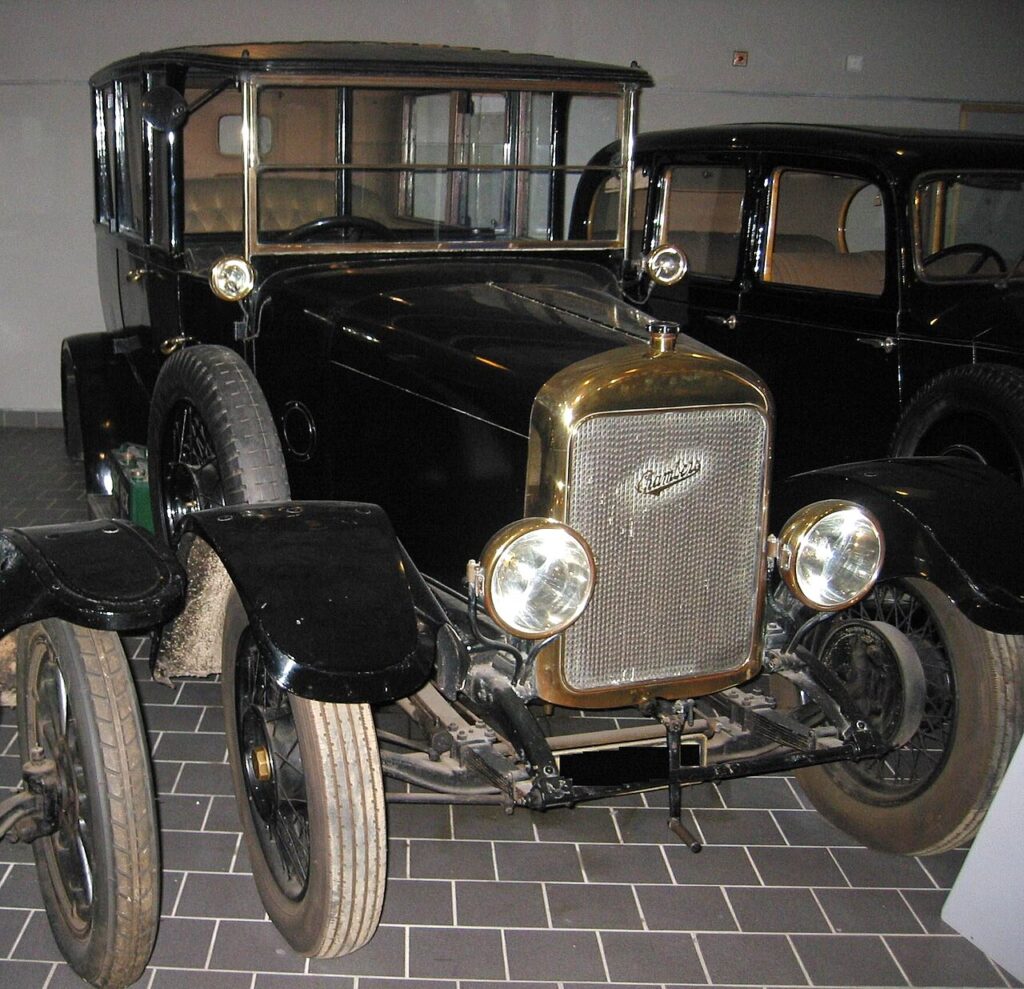
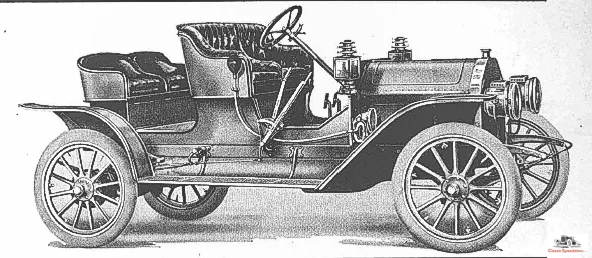
In 1907, Saunders Bros. also began to sell REOs manufactured by the REO Motor Car Company of Michigan and named after Oldsmobile founder’s initials, Ransom Eli Olds). By 1908, they were also distributors for the Hudson Motor Car Company (named for Detroit, Michigan, founder Joseph L. Hudson) and Chambers Motors, founded by Irish automaker Jack Chambers.
Around this time, Dudley Harvey opened a garage in Whittier and became a distributor for E-M-F automobiles. The E-M-F Company was derived from the initials of the three founders: Barney Everitt (a custom auto-body builder from Detroit), William Metzger (formerly of Cadillac), and Walter Flanders (who had served as Henry Ford’s production manager).
Soon afterward, the Whittier Implement Company at 204-206 West Philadelphia Street briefly assumed the E-M-F and Flanders agencies. Up to this time, the company had specialized in carriages and buggies. By 1908, Saunders Bros. once again held the E-M-F and Flanders agencies, later adding Ford’s automobile line.
Whittier did not see another vehicle manufacturer until about 1932, when United Auto Works opened at 109 S Milton Avenue. The company specialized in the final assembly of school bus bodies, adding windows and seating to Kenworth and International chassis. Their buses—such as the 1939 “Special” School Bus Body, which seated 49 passengers—were sold throughout California, including the local school districts in Simi Valley, Norwalk, Brea, and Fullerton.
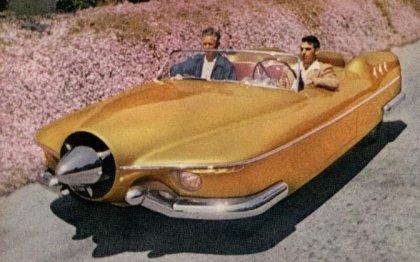
Automobile manufacturing did not return to Whittier for another two decades. In 1952, Glen Hire and Vernon Antoine of Whittier were inspired by General Motor’s 1951 Buick LeSabre concept car. Both working in aircraft design at North American, they transformed their garage into a workshop, purchased a 1951 Studebaker Commander, and began to transform the Studebaker into a futuristic car they called the Manta Ray. The front appeared to be jet-propelled, while the rear featured three rear tailfins housing Lincoln taillights. Los Angeles auto dealer Bob Yeakel purchased the car with plans for limited production, but the project never moved forward.
During the height of the “replicar” era of the 1970s and 1980s, Bobby Earlywine created a 1930s-style roadster known as the “California Special.” His company, Earlywine Custom Classics Inc., located at 12721 Omelia Road in the Whittier Hills, constructed the four-seat roadster on a Volkswagen Beetle chassis.
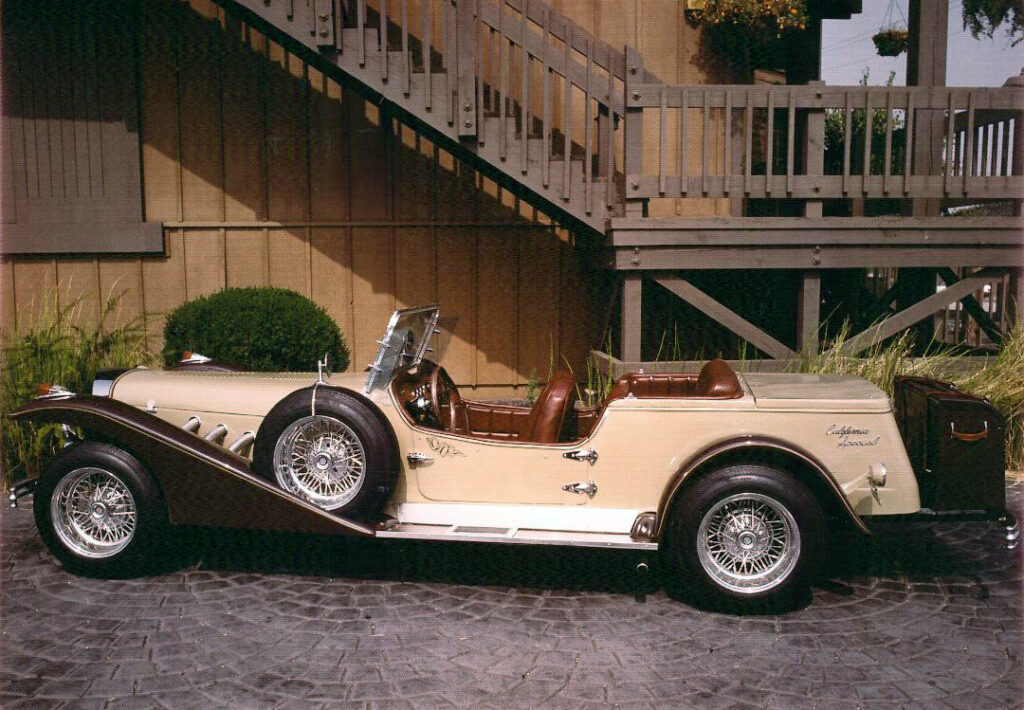
Earlywine’s second model, the Racer X, resembled a mid-1920s Bugatti Grand Prix racer and was also based on Volkswagen components. The Racer X featured a windshield and convertible top, with optional side curtains.
RYCA Motors operated in Whittier from 2010 to 2020. Founded by former NASA technician Casey Stevenson and business partner Ryan Rajewski, the company name combined the first two letters of each founder’s name. RYCA produced racing conversion kits for Suzuki motorcycles, most notably transforming the Suzuki LS650 Savage/Boulevard S40 into models such as the RYCA CS-2 Standard/Scrambler, CS Tracker, and RR-1, names indicating the style of motorcycle with the initials of the respective company founders. In 2013, RYCA introduced two additional models based on Harley-Davidson Sportsters. Their last RYCA motorcycle, the CS-1X, marked a 10th anniversary edition redesign of the CS-1. Production ceased in 2021.
Perhaps the most famous automobile producer associated with Whittier was automotive designer, racing driver, and entrepreneur Carroll Shelby. Shelby was best known for the AC Cobra and the Mustang-based performance cars developed in partnership with Ford Motor Company.
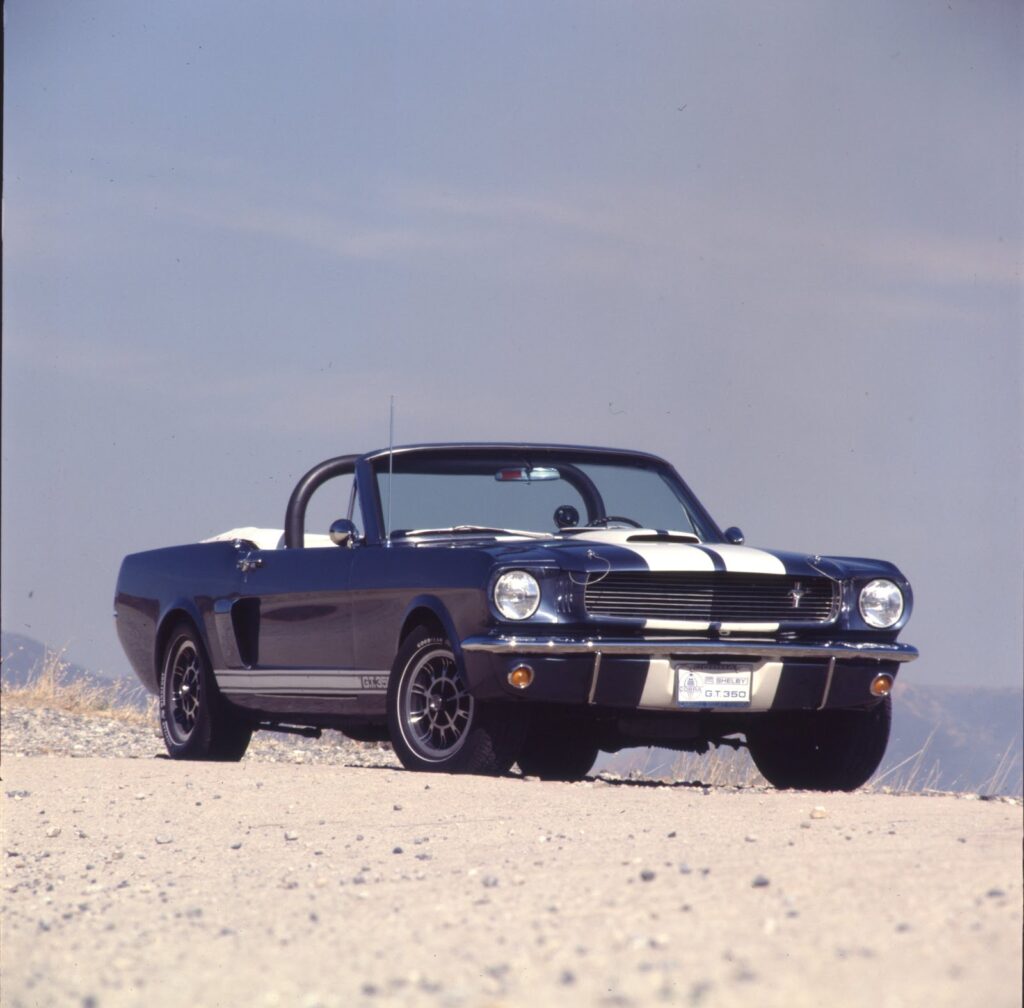
Shelby Automobiles, Inc. operated in Santa Fe Springs, Venice, Los Angeles, and Gardena before relocating to Whittier. The company opened in 1985 at 12444 Putnam Street (now part of PIH Whittier). Only five years later, Shelby ended its partnership with Chrysler and closed the Whittier location. Today, the company is headquartered in Las Vegas, Nevada, where it continues to produce Shelby Mustangs, Cobras, and Shelby F-150s.
Though often overlooked – or even unknown – Whittier’s automotive history is rooted in its community inventors, dealers, and designers, and is an enduring part of the city’s identity.
This article appeared in the August 2026 issue of The Gazette, with special thanks to Nathaniel Salvini, research archivist at the Petersen Automotive Museum in Los Angeles.